







In today’s digital world, simply having a website is no longer enough to become visible. Brands, businesses, and website owners need to build a strong digital presence so they can both reach their target audience and improve their visibility in search engines.
To achieve this, content creation, technical SEO, on-page optimization, and off-page SEO strategies should work together.
One of the most commonly used methods in off-page SEO is publishing sponsored articles.
When published on the right website, with high-quality content and proper targeting, a sponsored article can help a brand increase its visibility across the web, reach new audiences, generate referral traffic, and strengthen its overall digital presence.
However, not every sponsored article provides the same value.
A website having high DA or PA scores does not automatically mean that it is the right publishing platform for your project. Relevance, content quality, real traffic, indexability, publishing history, and the overall quality of the website should all be evaluated together.
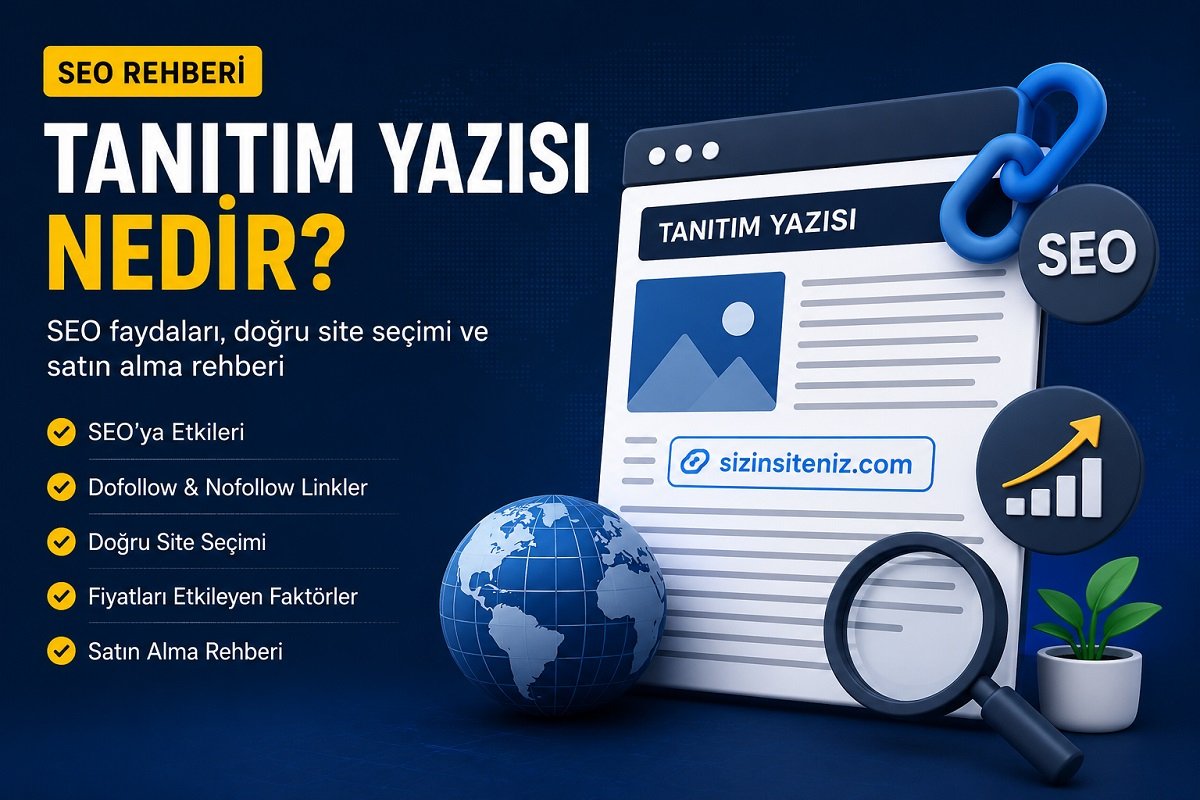
In this guide, we will explain what a sponsored article is, how it should be evaluated from an SEO perspective, how to choose a quality publishing website, and what to consider before purchasing a sponsored article placement.
What Is a Sponsored Article?
A sponsored article is a piece of content published on another website to introduce or promote a brand, website, product, service, project, or business.
Unlike traditional banner advertising, sponsored articles are generally published in the form of an article, editorial feature, or news-style content.
The brand, service, or product is introduced naturally within the content, and relevant links may be added to direct readers to the promoted website.
For example, an e-commerce business may publish an informative article on an industry-related blog to introduce its services and reach a relevant audience.
Sponsored articles can also be used to:
- announce a new product,
- introduce a brand story,
- promote a newly launched website,
- present the services of a local business,
- announce a startup or project.
For this reason, sponsored articles should not be considered only as a way of obtaining backlinks.
A well-planned publication can also support brand awareness, digital PR, referral traffic, and audience acquisition.
Why Are Sponsored Articles Important for SEO?
Search engines evaluate websites by looking at many different signals.
Content quality, technical performance, user experience, site structure, and how a website is referenced across the web may all contribute to its overall visibility.
Being mentioned on other relevant websites is a natural part of building a digital presence.
When sponsored articles are used as part of a broader marketing and SEO strategy, they can provide several benefits.
They Can Increase Brand Awareness
Users do not discover brands only through Google.
News websites, blogs, industry publications, forums, and other digital platforms also play an important role in brand discovery.
Publishing content on a website that has a genuine audience within your industry can introduce your brand to people who may not have heard of you before.
For example, publishing a travel-related business on a tourism website will generally be more relevant than placing the same article on an unrelated website.
This is why audience and industry relevance are extremely important when choosing a publishing platform.
They Can Generate Referral Traffic
The value of a sponsored article should not be measured only in terms of SEO.
A reader who finds the article useful may click through to your website to learn more about your brand, product, or service.
This can generate direct referral traffic.
Referral traffic from websites that have a genuine audience and are related to your industry can be especially valuable.
A useful question to ask before purchasing a sponsored article is:
“If this link had no SEO value at all, would I still want my brand to appear on this website?”
If the answer is yes, you may be looking at a valuable publishing opportunity.
They Can Strengthen Your Brand’s Digital Presence
When a brand is mentioned across multiple reputable websites, its digital footprint becomes stronger.
When users search for the brand name, they may see not only the brand’s own website but also articles, news stories, and other third-party references.
This can be especially useful for brand-building and digital reputation strategies.
They Can Help Your Content Reach More People
Even if your website contains excellent content, it may take time for that content to reach a wider audience.
Being mentioned on other websites can help new users discover your brand and your content.
For this reason, sponsored articles can also be part of a broader content distribution strategy.
Are Sponsored Articles and Backlinks the Same Thing?
Although they are closely related, a sponsored article and a backlink are not the same thing.
A backlink is a link from another website to your website.
A sponsored article, on the other hand, is a piece of published content that introduces a brand, website, or service. The article may include one or more backlinks.
Therefore, a sponsored article may contain backlinks, but its purpose does not have to be limited to link building.
A high-quality publication may provide three types of value at the same time:
- Brand exposure,
- Referral traffic,
- Mentions and references across the web.
For this reason, sponsored article campaigns should not be evaluated only by asking, “How many backlinks did I get?”
The overall value of the publication should also be considered.
What Makes a High-Quality Sponsored Article?
The quality of the article itself is just as important as the website where it is published.
Content written only to insert a few keywords and links does not provide meaningful value to readers.
A high-quality sponsored article should have several important characteristics.
It Should Be Original
Instead of publishing exactly the same article across dozens of websites, it is generally better to create original or meaningfully adapted content for each publication.
The article should provide real value to the reader rather than appearing to exist only for link placement.
It Should Be Useful to Readers
The main purpose of the article should be to answer a question, provide useful information, or help readers understand a brand, product, or service.
For example, instead of repeatedly mentioning the name of a car rental company, a useful sponsored article could also explain topics such as insurance options, deposits, vehicle delivery procedures, and what customers should check before renting a car.
This transforms the content from a simple advertisement into a genuinely useful resource.
It Should Use Natural Language
Repeating the same keyword in every paragraph reduces readability.
If the target keyword is “sponsored article,” it does not need to be forced into every sentence.
Related expressions such as content placement, digital publishing, branded content, off-page SEO, or editorial publication can be used naturally.
The first priority should always be readability.
It Should Have a Clear Heading Structure
A quality article should not consist of one long block of text.
H1, H2, and where necessary H3 headings should be used in a logical hierarchy.
This makes the content easier for readers to scan and helps create a clearer structure for the page.
How Do You Choose the Right Website for a Sponsored Article?
Choosing the right publishing website is one of the most important stages of the process.
A website should not be selected simply because it appears popular or has high third-party SEO metrics.
Several factors should be evaluated together.
Industry Relevance
One of the first things to check is the relationship between the publishing website and your own industry.
A technology brand may benefit from being featured on technology, startup, business, or general news websites.
However, publishing on completely unrelated websites only for the purpose of obtaining a link may offer limited value to users.
It is not always possible to find a website in exactly the same niche. In that case, consider whether the audience is still relevant to your business.
Real and Organic Traffic
High SEO metrics do not guarantee that a website has real visitors.
Whenever possible, evaluate the website’s organic visibility and traffic history.
Be cautious with websites that have little or no organic visibility, are rarely updated, or consist almost entirely of paid promotional content.
Traffic quality is also important.
Consider where the visitors come from, what topics generate traffic, and whether that audience matches your target market.
Google Indexing Status
For a publication to provide visibility, it should first be accessible and indexable.
Before purchasing a sponsored article, you can check whether pages from the website appear in Google.
After publication, you should also confirm that the delivered article URL is accessible.
Indexing alone is not a quality metric, but a page that cannot be crawled or remains consistently excluded from search results should be evaluated accordingly.
Content Quality
Review other articles on the website.
Check whether the articles are readable, original, regularly updated, and useful.
Also examine whether the website publishes genuine editorial content or mostly promotional articles.
A real content website usually has a noticeably different structure from a website created mainly to sell links.
Domain Age
Domain age can be useful as a supporting data point, but it is not a quality metric on its own.
A ten-year-old domain may be poorly managed, while a two-year-old website may publish excellent content and receive substantial organic traffic.
Domain age should therefore be considered together with other quality signals.
DA and PA Scores
Domain Authority and Page Authority are third-party metrics developed by SEO tool providers.
They are not official Google ranking scores.
For that reason, assuming that a website is automatically valuable because it has a high DA score is not a reliable approach.
DA, PA, and similar metrics can be useful for comparison, but they should be evaluated together with traffic, relevance, content quality, indexability, and overall website credibility.
External Link Profile
A website where nearly every article links to a different commercial website should be evaluated carefully.
A healthy publishing site usually has a balanced content strategy.
News, guides, educational articles, editorial features, and promotional content should ideally coexist naturally.
What Is Anchor Text and How Should It Be Used?
Anchor text is the visible, clickable text of a link.
For example, in the phrase:
“Explore sponsored article services”
the clickable words may serve as the anchor text.
Instead of repeatedly using the same commercial keyword, it is more natural to vary anchor text.
Different options may include:
- brand name,
- website name,
- direct URL,
- service name,
- natural phrases such as “learn more.”
The main purpose of anchor text is to help users understand where the link will take them.
For that reason, it should first be clear and natural.
What Are Dofollow and Nofollow Links?
The terms “dofollow” and “nofollow” are commonly used when discussing backlinks.
A normal link may not contain a special rel attribute, while attributes such as nofollow, sponsored, and ugc can provide search engines with additional information about the nature of a link.
For paid or sponsored placements, Google recommends identifying commercial links appropriately. One commonly recommended option is rel="sponsored", while nofollow can also be used for paid links.
Therefore, instead of focusing only on the question “Is the link dofollow?”, it is better to evaluate the overall value of the publication in terms of brand exposure, audience, traffic, and visibility.
Common Mistakes When Buying Sponsored Articles
Sponsored article campaigns often fail because of poor execution rather than because the method itself is ineffective.
One common mistake is choosing websites only based on price.
The cheapest placement is not necessarily the best value, and the most expensive one is not automatically the highest-quality option.
Another mistake is focusing only on DA and PA values.
Third-party metrics can be helpful, but they should never be the only decision-making factor.
Using exactly the same anchor text in every publication is another poor practice.
Brand names, URLs, service names, and natural expressions can help create a more balanced linking structure.
Publishing content on unrelated websites should also be avoided whenever possible.
Finally, very short articles created only to repeat the brand name and insert links usually provide little value.
Instead of targeting a specific word count, the content should be long enough to answer the reader’s questions properly.
Should You Buy a Single Sponsored Article or a Package?
There is no single answer that applies to every project.
For a new website or brand, it may make sense to begin with a small number of carefully selected publications.
For larger brand awareness, digital PR, or content distribution campaigns, sponsored article packages containing multiple websites may be considered.
The number of publications should not be the only factor.
In many cases, a smaller number of highly relevant and higher-quality publications can be more valuable than appearing on hundreds of low-quality websites.
When evaluating a sponsored article package, review the websites included, their industries, traffic levels, content quality, publishing conditions, and link attributes.
Sponsored Article or Footer Link?
Sponsored articles and footer links are two different publishing models.
In a sponsored article, the link generally appears within a relevant article or editorial page.
A footer link appears in the footer section of a website and, depending on the website structure, may appear across multiple pages.
Sponsored articles offer more context and allow brands to communicate their message within a full piece of content.
Footer links provide a different type of visibility and link placement.
Which option is more suitable depends on the goals of the project, the publishing website, the target audience, and the broader SEO and marketing strategy.
What Determines Sponsored Article Prices?
Sponsored article prices can vary significantly between websites.
Pricing may depend on factors such as website traffic, brand recognition, industry, domain history, whether content creation is included, publication duration, link conditions, homepage exposure, category placement, and additional promotional services.
For this reason, it is normal for two websites to charge very different prices for sponsored content.
The goal should not simply be to find the cheapest option.
Instead, businesses should look for the best overall publishing value for their budget.
Sponsored Article Buying Checklist
Before ordering a sponsored article, consider the following questions:
- Is the website relevant to my industry or target audience?
- Does it publish real and regularly updated content?
- Does the website have search visibility?
- Are the articles useful and readable?
- Is the publication permanent or time-limited?
- Is article writing included in the service?
- How many links are allowed?
- Are link attributes and commercial publishing conditions clearly explained?
- Will I receive the live URL after publication?
- Does the price match the overall value of the website?
Being able to answer these questions clearly can help you make a more informed decision.
How to Buy Sponsored Articles with SEO Abisi
Contacting multiple publishers individually, requesting prices, making separate payments, and tracking each publication can become time-consuming, especially when managing larger campaigns.
SEO Abisi is an SEO-focused publishing marketplace designed to help brands, agencies, and website owners review different publishing opportunities from a single platform.
Users can compare sponsored article opportunities across different categories and choose suitable options based on their budget, industry, and publishing requirements.
The process is straightforward.
First, browse available sponsored article listings and identify websites that match your industry and budget.
Next, compare the website, publishing conditions, and services included in each offer instead of considering price alone.
Then provide the required information, such as your brand name, target page, article content, and other publication requirements.
Finally, track the order through the platform and review the live URL when the publication is completed.
This structure can make it easier to manage sponsored article campaigns involving multiple publishers.
How to Build a Long-Term Sponsored Article Strategy
One of the most common mistakes in SEO is treating every activity as a one-time task.
A strong digital presence is built over time.
A more balanced sponsored article strategy may include choosing relevant publishers, varying brand and anchor text naturally, linking not only to the homepage but also to genuinely useful service or content pages, regularly evaluating publication quality, and combining off-page activities with content marketing and technical SEO.
Sponsored articles are not a magic solution that can fix every SEO problem.
A technically weak, slow, low-quality website with poor user experience cannot be expected to achieve sustainable results through external links alone.
Strong long-term results usually come from combining a quality website, useful content, technical SEO, brand awareness, and a sustainable publishing strategy.
Conclusion: Quality Matters More Than Quantity
When planned correctly, sponsored articles can offer much more than a simple backlink.
They can help your brand appear across relevant platforms, reach new audiences, generate referral traffic, and strengthen your digital presence.
Instead of asking:
“How many sponsored articles should I buy?”
a better question is:
“Which websites would actually be valuable places for my brand to appear?”
Do not make publishing decisions based only on DA, PA, or domain age.
Evaluate industry relevance, real traffic, content quality, indexability, publishing history, and overall user value together.
Through SEO Abisi, you can compare different sponsored article opportunities and sponsored article packages and explore options that match your goals and budget.
Remember: sustainable digital visibility is not built through a single SEO action. It is created by combining quality content, strong technical foundations, and a consistent publishing strategy.
Frequently Asked Questions
What is a sponsored article?
A sponsored article is a piece of content published on another website to introduce a brand, website, product, service, or project. It may include one or more links to the promoted website.
Are sponsored articles useful for SEO?
Sponsored articles can contribute to brand visibility, referral traffic, and digital exposure when they are published on relevant and reputable websites. Their SEO value depends on factors such as website quality, industry relevance, link attributes, and the broader SEO strategy.
What should I consider when buying a sponsored article?
Consider industry relevance, real traffic, indexability, content quality, publishing history, link conditions, and pricing together. Do not choose websites based only on DA or PA.
Does a high DA or PA mean a website is high quality?
No. DA and PA are third-party SEO metrics and are not official Google ranking scores. They can be useful for comparison but should not be treated as standalone quality indicators.
How long should a sponsored article be?
There is no universal ideal word count. The article should be long enough to explain the topic properly and provide genuine value to the reader. Adding unnecessary words solely to increase length does not improve content quality.
Should I buy sponsored articles or backlinks?
A sponsored article may already contain one or more backlinks. A backlink refers to the link itself, while a sponsored article refers to the full content and publishing model surrounding that link.
Is a sponsored article better than a footer link?
They serve different purposes. Sponsored articles provide contextual placement within content, while footer links appear in a website’s footer. The right choice depends on the project, website, target audience, and overall strategy.
Why do sponsored article prices vary?
Pricing may depend on website traffic, authority, niche, publishing duration, content creation, link conditions, homepage exposure, and additional services.
Can the same sponsored article be published on multiple websites?
Technically yes, but creating original or appropriately adapted content for each publisher is generally a better approach. Tailoring the article to the audience and website can improve its overall quality.
Is buying sponsored articles enough to rank higher on Google?
No. Search visibility depends on many factors, including technical SEO, content quality, site structure, user experience, brand trust, and overall website quality. No sponsored article or backlink campaign can guarantee a specific Google ranking.
English Meta Title:What Is a Sponsored Article? SEO & Buying Guide
English Meta Description:What is a sponsored article and how can it support SEO? Learn how to choose quality websites, evaluate backlinks, pricing, DA/PA and sponsored content.
Suggested English URL Slug:what-is-a-sponsored-article-seo-buying-guide
Primary keyword: sponsored article
Secondary keywords: sponsored article SEO, buy sponsored articles, sponsored content, sponsored article backlinks, sponsored article prices, guest post advertising, SEO sponsored articles, sponsored article marketplace.